

STATUS
What is the regulatory status of Selektope® in the EU?
Selektope® is not approved for continued use as an active substance in antifouling products within the European Union.
The decision applies specifically to the EU market. Selektope® remains approved for use in key marine markets outside the EU and can continue to be used in accordance with applicable national and regional regulations.
The EU decision does not change Selektope®'s regulatory status in markets outside the EU.
What does the EU decision mean in practice?
Most vessels remain unaffected. The key factors are how the vessel trades, whether a transfer is involved and who the registered owner is.
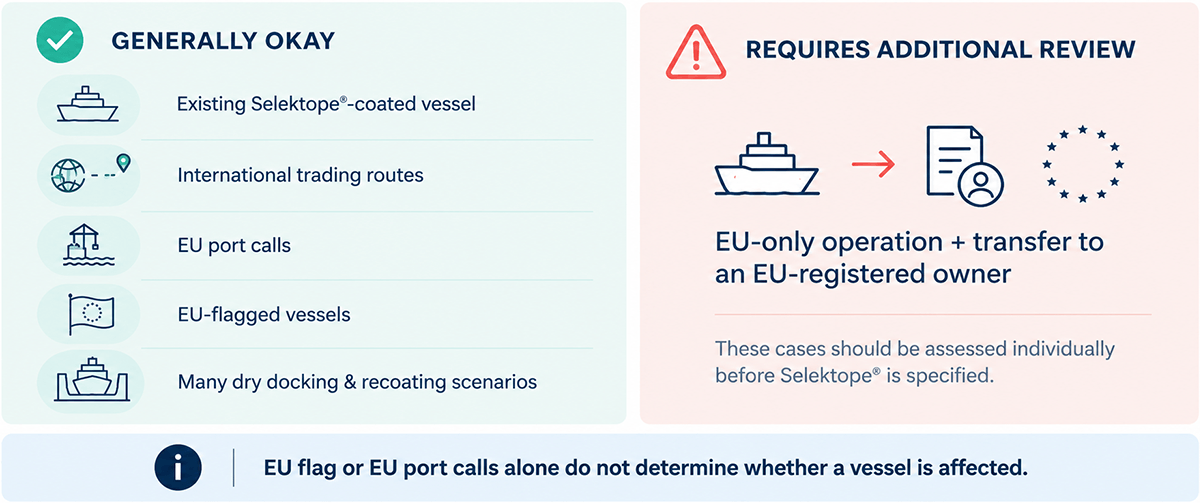
Disclaimer: The information provided is I-Tech’s interpretation of the Biocidal Products Regulation((EU) No 528/2012) and Commission notice The ‘BlueGuide’ on the implementation of EU product rules. Customers remain responsible for complying with all applicablelegal and regulatory requirements in their intendedmarkets.
Why was Selektope® not renewed in the EU?
The EU decision is based on the regulatory assessment of medetomidine, the active substance in Selektope®, under the EU Biocidal Products Regulation (BPR).
As part of the renewal process, medetomidine was identified as having endocrine-disrupting properties. Under the BPR, substances that meet certain exclusion criteria are generally not approved unless specific conditions for derogation are met.
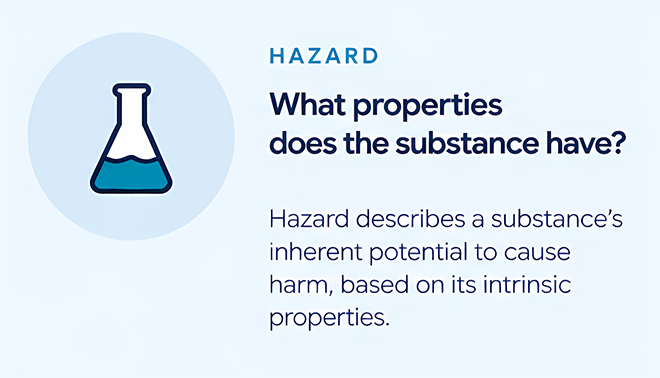
The assessment focuses on the hazardous properties of medetomidine. I-Tech's position is that this does not reflect risk associated with Selektope® under use in antifouling coatings.

Why does I-Tech disagree with the EU assessment?
I-Tech respects the EU regulatory process but disagrees with the conclusion that the available scientific evidence justifies excluding medetomidine from continued use in antifouling coatings.
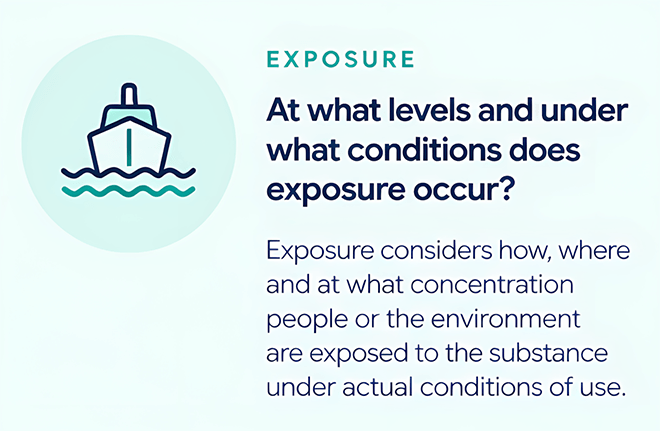
I-Tech believes that the assessment focuses on the intrinsic hazard of medetomidine without sufficiently reflecting the very low levels of exposure associated with its actual use in antifouling coatings.
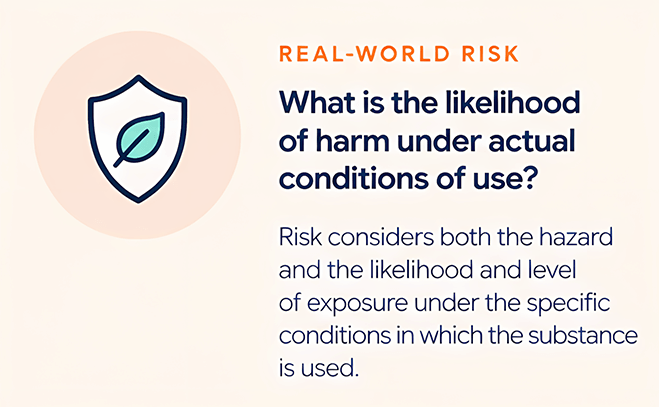
In I-Tech's view, understanding the real-world risk requires considering both the properties of the substance and how, where and at what concentration it is actually used. I-Tech believes real-world exposure and conditions of use are essential to understanding the actual risk of Selektope®
THE SCIENCE
What does the scientific evidence show?
Selektope® is backed by more than two decades of research into its mode of action, efficacy, environmental behaviour and use in marine antifouling coatings.
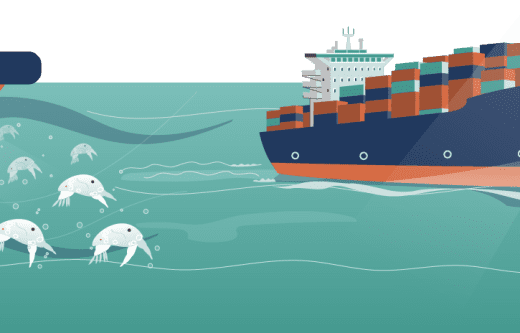
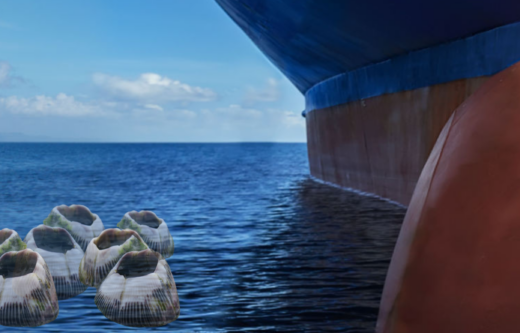
The evidence shows that Selektope® works differently from many conventional antifouling substances. It provides effective protection against barnacle fouling at a very low active-substance load and works by temporarily stimulating the swimming behaviour of barnacle larvae, preventing them from settling on the hull without killing them.
Antifouling – the bigger picture
Assessing the environmental impact of antifouling requires looking beyond the properties of an individual active substance.
Effective antifouling keeps hulls clean, reducing hydrodynamic resistance, fuel consumption and emissions. It also helps prevent the transfer of invasive aquatic species between marine ecosystems.
The environmental impact must therefore be considered as a whole – including the effectiveness of the coating and the benefits of preventing fouling.

What happens if Selektope® is removed from the toolbox?
The environmental impact of a regulatory decision also depends on the technologies available to replace the substance.
Removing an effective antifouling technology from the toolbox can have consequences beyond the active substance itself. The overall environmental impact should therefore be considered as a whole – including hazard, exposure, antifouling efficacy, vessel efficiency, biofouling and the alternatives available.
Watch the video: What does this decision mean for the future of sustainable fouling management?
What does the maritime industry say?
Stakeholders have raised concerns about the consequences of non-renewal. The potential loss of Selektope® from the EU market has raised concerns among stakeholders across the maritime industry.
During the European Commission's public consultation on the renewal of medetomidine, stakeholders from across the maritime value chain submitted information on the potential consequences of non-renewal. Respondents included shipowners, shipyards, marine paint manufacturers, industry associations, marine equipment manufacturers and alternative technology providers.
Across the non-confidential submissions reviewed by I-Tech, several recurring concerns emerged.

"The efficacy of marine biocides in Pt21 (Product Type 21, Antifouling Products) is rigorously tested and is an essential technology for the decarbonisation of global shipping.”
Source: Paint Manufacturer
“As a result of evaluation in real sea with various conditions, it was confirmed that the antifouling performance of products containing a small amount of 'Medetomidine' was far superior to those that did not."
Source: Ship Builder
"The increase in emissions to air that a non-approval could cause would go against all efforts for a more sustainable shipping industry in Europe."
Source: Distributor
What happens next?
I-Tech remains committed to supporting customers through the changing regulatory landscape and providing clear, up-to-date guidance on where and how Selektope® can be used.
Following the EU decision, I-Tech will continue to support customers in understanding its practical implications, while supplying Selektope® in markets where its use remains approved.
FAQ
Frequently asked questions
Here are the most frequently asked questions.
Latest News & Blog




For paint manufacturers
Push the boundaries of coating innovation.

For ship owners & shipyards
Unlock the benefits.

